




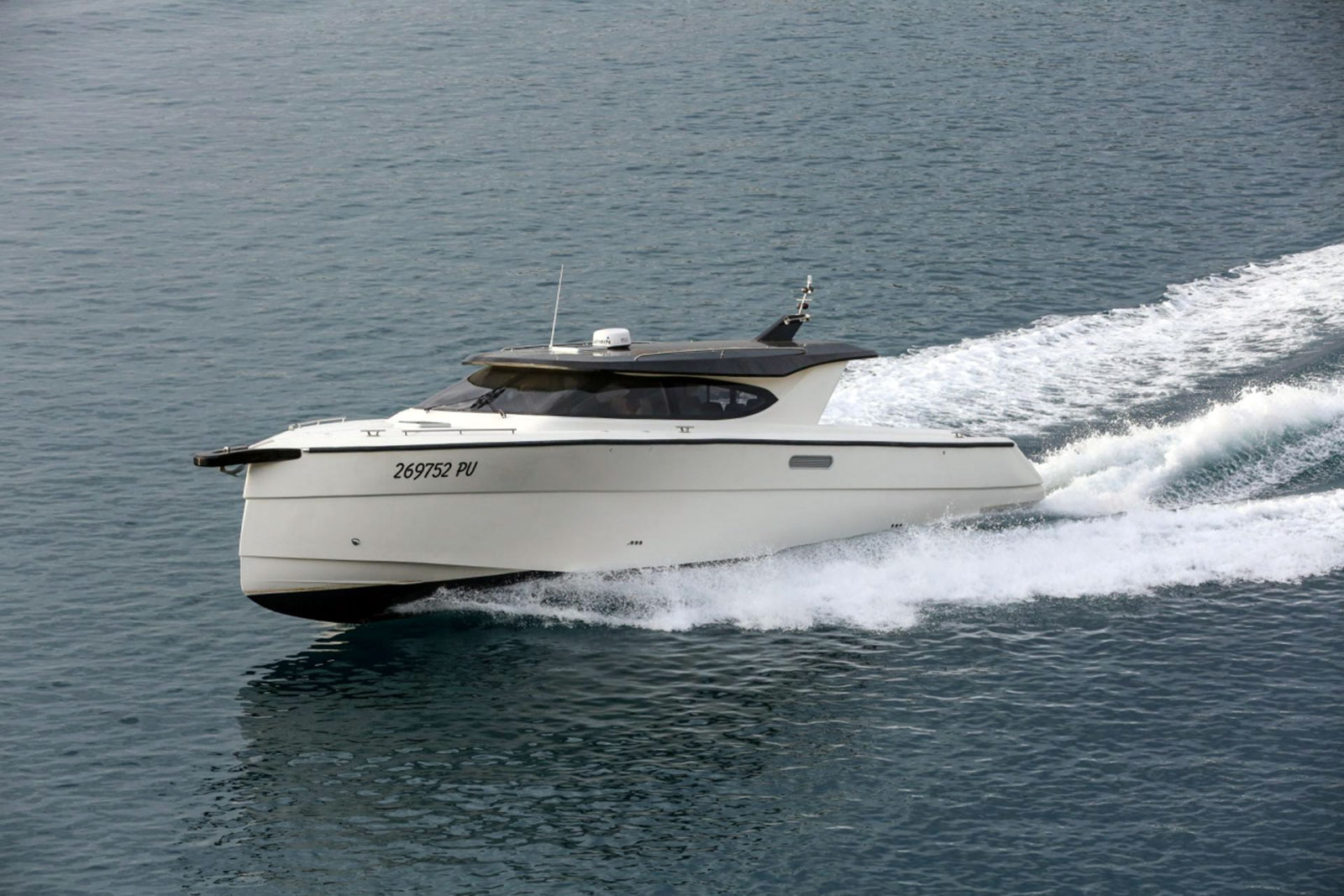
Italian designer Gianluca Adragna received an unusual request from Croatia three years ago – to design a passenger vessel with a more avant-garde appearance, inspired by luxury speedboats such as Van Dutch and Pardo. Clean lines, a sharp bow, high freeboards, and elegance are what the market demands today.
The greatest challenge for the designer was the vessel’s purpose: instead of an open cockpit, a roof and enclosed seating with aircraft-level comfort were required. After aligning expectations, capabilities, and budget, the final result was Sport Mare CS 45 – one of the boldest design achievements of Croatian small shipbuilding in recent years.
From the name itself, it can be concluded that the shipbuilder is a domestic company from Velika Mlaka, known for affordable traditional boats, and in recent years for tourist vessels and submarines. In 20 years of operation, this represents their most demanding infrastructural project, as handling a 12-meter mold requires space, patience, and experience.
The decision to choose a not exactly inexpensive foreign designer proved to be a wise move, as very few locally have sufficient experience with vessels of this size.
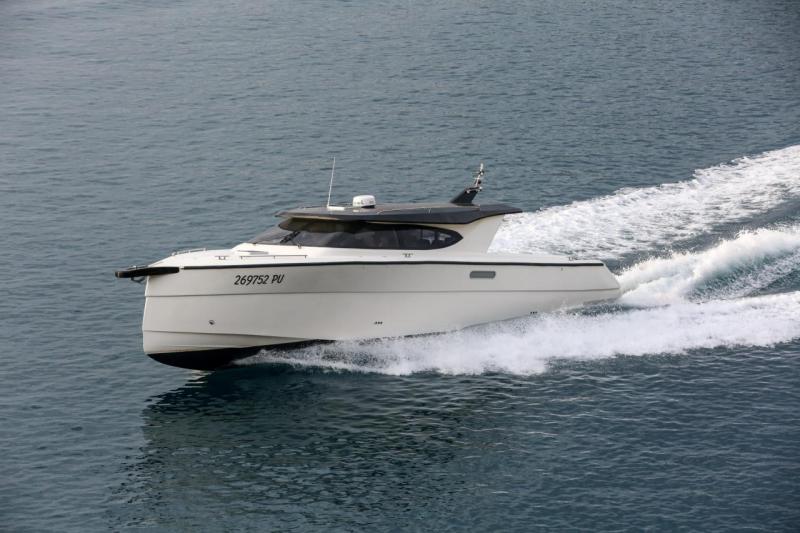
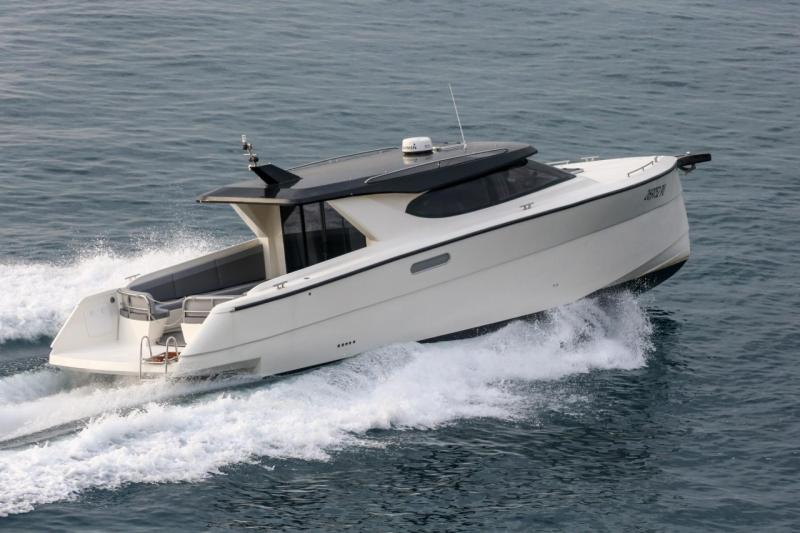
The final design looked sensational in computer simulations, especially in versions with premium finishes and Italian seats instead of standard chairs. However, even the prototype moored in Veruda, among conventional boats, looks almost extraterrestrial, despite its standard interior and white hull instead of the planned silver finish.
Single engine
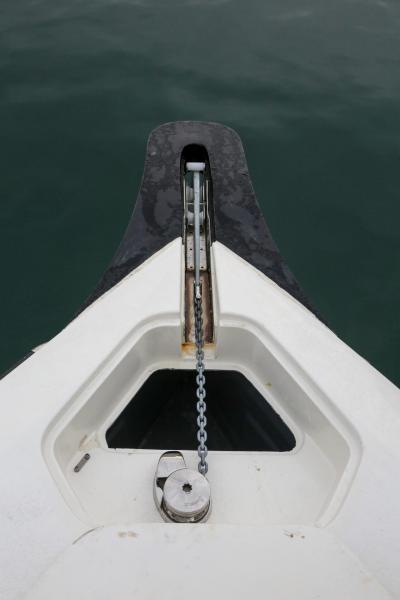
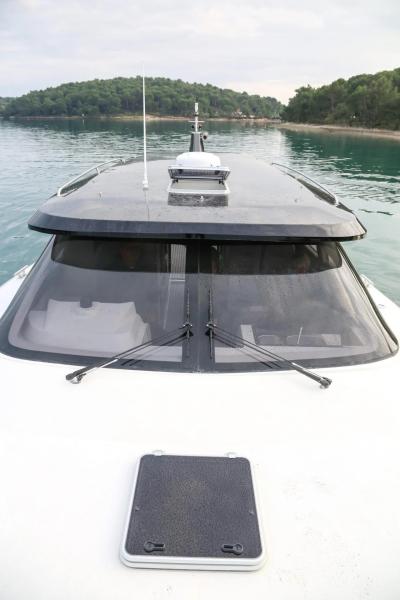
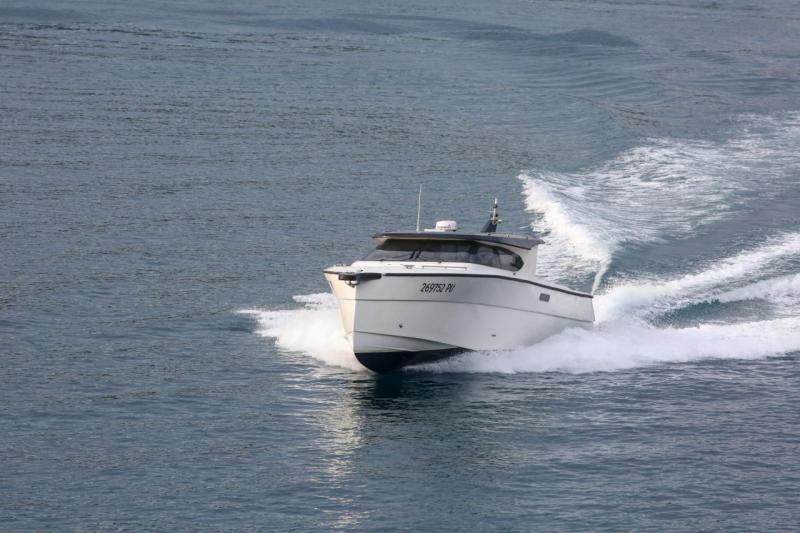
The threatening dark windshield, high freeboards, and sharp bow appear designed for record-breaking speeds. Judging by the curved exterior lines of the superstructure and hull, one might assume speeds of 50 knots, which is far from reality even in versions with up to 1,000 horsepower. Additional aggressiveness will be offered by a version with three outboard engines of approximately 300 hp each.
However, as this is primarily an economical transporter, the tested vessel reaches only half that speed, powered by a single diesel engine. For this mission, probably the most popular engine among Croatian maritime transport operators was chosen – the Cummins QSB 6.7 with 480 horsepower.
This is more than sufficient for a nine-ton vessel, as strong torque is delivered already at 2,000 RPM. With four people onboard and no cargo, the load was negligible. The hull sits nicely in the water and accelerates smoothly. The mass allows for stable trim and excellent comfort when crossing waves, largely thanks to the sharp bow and four-meter-wide beam.
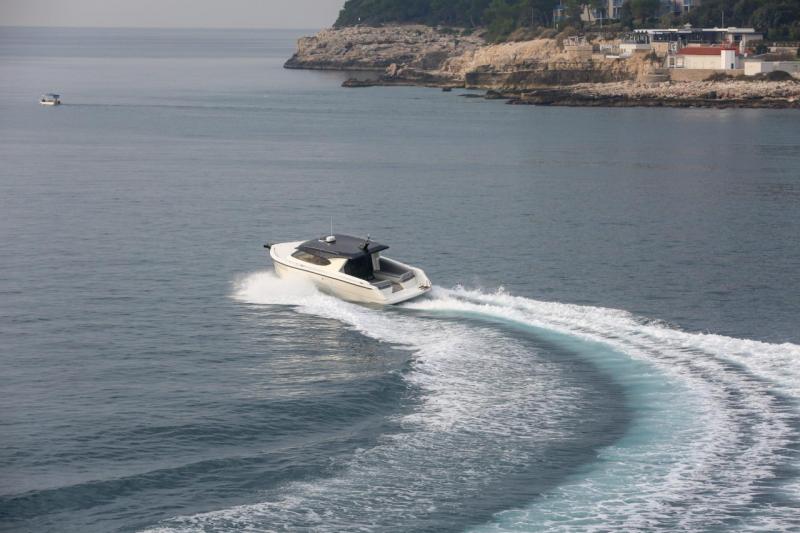
Bow and stern thrusters make docking maneuvers easy, but with only one engine, agility while planing is limited. The rudder works against the laws of physics as best it can, and a full turn requires about seventy meters. Too much for test criteria, but the CS 45 with a central shaft line is designed as a line vessel, for which it performs well.
Visibility from the skipper’s position is somewhat compromised, as the bow is raised while underway and the curved plexiglass significantly distorts the view toward the corners. Replacing it with more expensive tempered glass should improve this.
Stern overhang
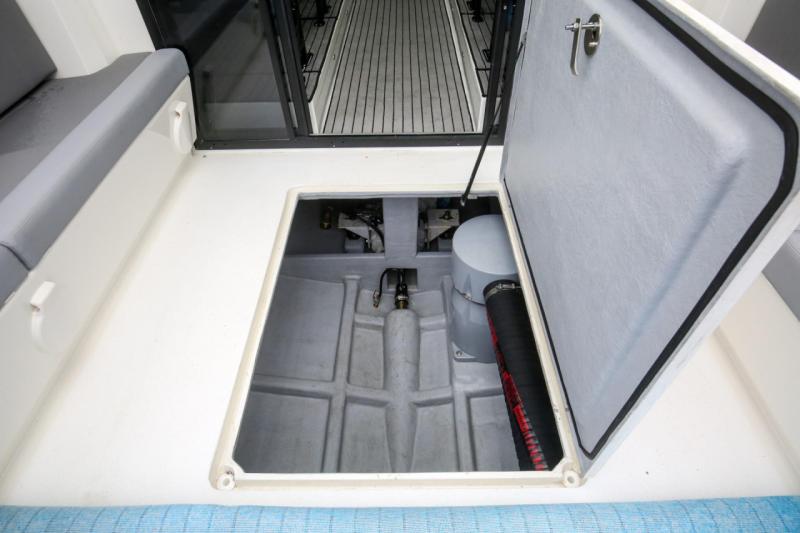
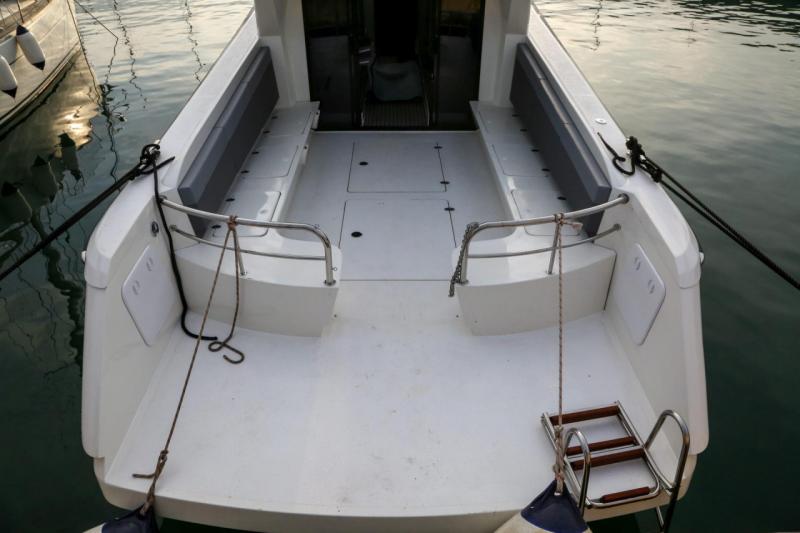
The voluminous six-cylinder engine weighing 650 kilograms is not excessively noisy, even though it is positioned between seats in the enclosed cabin area. This seemingly improvised engine placement is the result of a two-meter stern overhang, which extends the vessel well beyond the hull length. This is advantageous for the design class and provides users with excellent additional space for boarding and leisure.
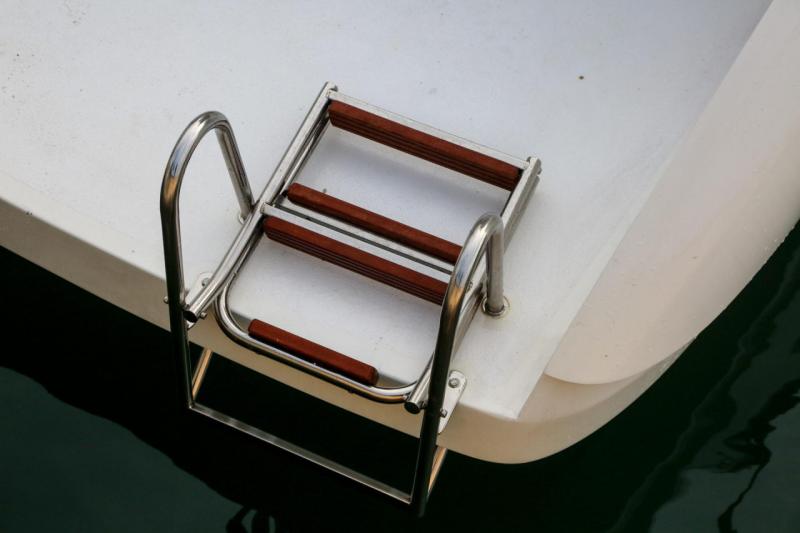
Classic ladders are provided for exiting the water, although such a futuristic design deserves something more innovative – at least a concealed hatch within the empty stern volume. A carbon gangway would also fit well, enabling easier boarding and access along the side, as there is currently no step installed.
Moving toward the bow in rough seas is risky, as the boat lacks side railings and relies solely on a roof handrail. From an aesthetic standpoint this is understandable, but in practice it only works if passenger movement is restricted. Given the ample stern space, there is little reason for people to walk along the narrow side decks.
The passenger area is primarily intended for guests: 12 seats arranged neatly like on a bus, in three rows facing forward, toward the hostess, galley block, and LCD television. Above the refrigerator with refreshments is a stainless-steel sink with unnecessarily oversized edges.
The idyllic excursion ambiance is legally and logically ideal for transporting tourists to island destinations. Passengers enjoy a pleasant view through the side windows, and dedicated USB ports are a welcome addition. The comfortable seats were sourced from England, though plans exist to develop similar seating in-house.
Transporter for 26 passengers
An interior height exceeding 190 centimeters is a major comfort advantage. Currently, ventilation is provided through two small skylights, which effectively replace air conditioning while underway, though climate control can be installed as an option. Additional skylights would be useful, especially above the skipper’s seat, to improve communication with the outside environment, as the side windows do not open. A window would also be beneficial in the toilet compartment located in the bow, as the built-in fan is insufficient.
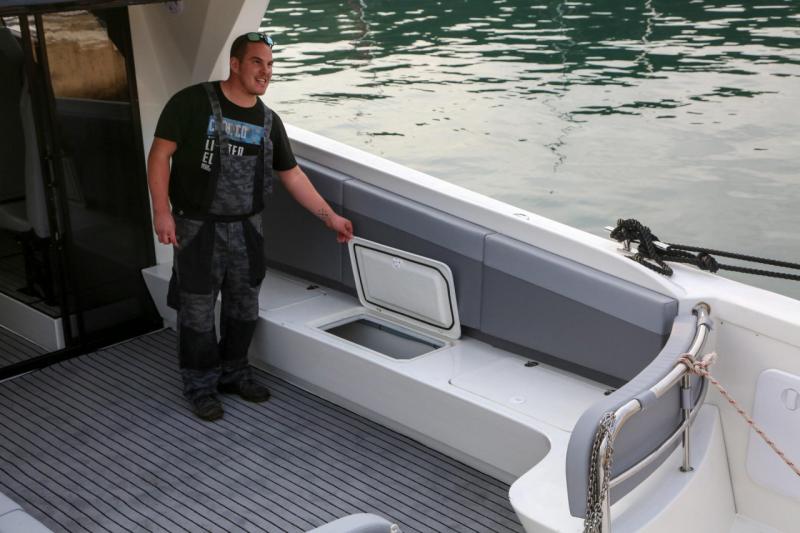
Between the toilet and passenger area are two benches designed as auxiliary berths for the crew, with storage cabinets above. This space could easily accommodate six additional passengers. The external benches in the stern cockpit can seat around ten people, making it unsurprising that the vessel is also planned in a configuration with 26 individual seats, which could be particularly attractive to rental operators.
Registry rules for this capacity are strict, but the shipbuilders are confident that all requirements will be met and that the market will be offered exactly what it demands. It has long been suggested that a fleet of such fast and economical vessels could be ideal for connecting smaller islands instead of large ferries and catamarans that are unprofitable outside the peak season.
Several units of the tested model will already be cruising the Adriatic next summer, and we look forward to the announced ten-meter version, which will be offered alongside working configurations in a leisure-oriented concept with two large cabins tailored to private owners.
Specifications
- Length overall: 13.98 m
- Hull length: 11.68 m
- Beam: 4.13 m
- Draft: 0.91 m
- Weight: 8,800 kg
- Payload: 1,560 kg
- Category: C / 14 persons
- Fuel tank: 900 l
- Engine: Cummins 480 HP
- Manufacturer: Sport Mare, Velika Mlaka
- Price: €180,000 + VAT
RPM, speed and fuel consumption (*)
| RPM | Speed | Consumption |
|---|---|---|
| 1000 | 6.5 | 5 |
| 1500 | 10 | 11 |
| 2000 | 14.5 | 27 |
| 2500 | 20 | 51 |
| 3000 | 25 | 91 |
* (manufacturer data)
Final assessment
- Attractive design
- Passenger space
- Stern platform
- Limited visibility through plexiglass
- Windowless toilet
- Lack of railings